The finished product — two brands, one component system
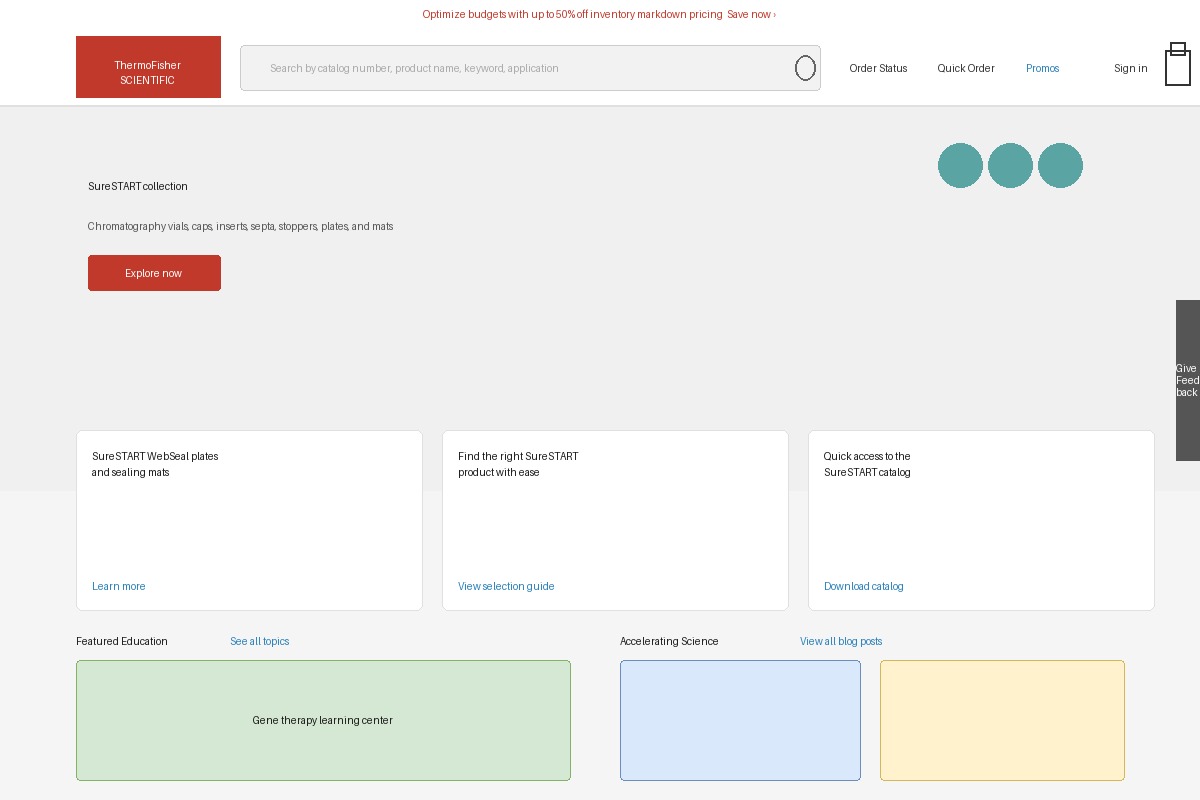
thermofisher.com
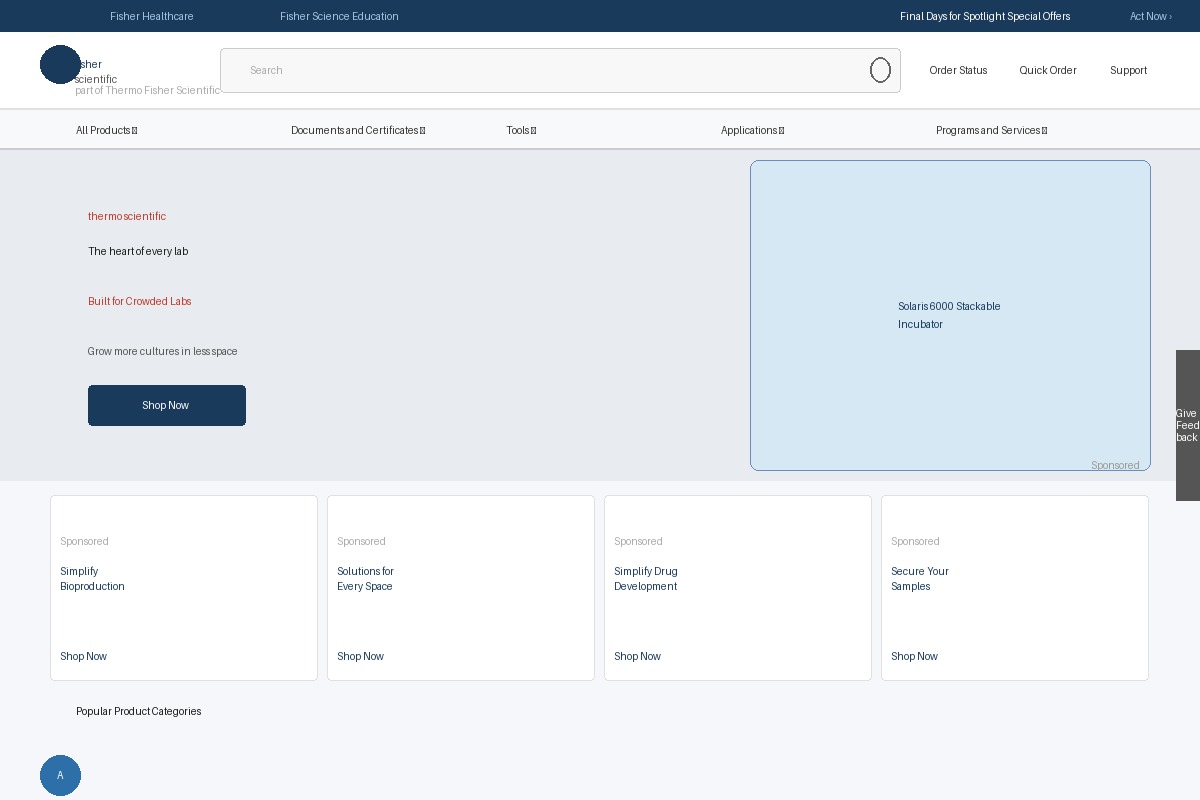
fishersci.com
I led the AEM engineering, stakeholder alignment, and release management for the homepage redesign of thermofisher.com and fishersci.com — two of the largest e-commerce sites in life sciences.
thermofisher.com and fishersci.com are visited by millions of researchers, scientists, and procurement professionals every month. The homepage is the first thing every one of them sees — and both sites had the same problem: the design had accumulated years of incremental changes without a cohesive direction, and the page wasn't doing its job.
Visually, neither homepage reflected the updated brand identity or the component system being built across the rest of the site. Functionally, the information hierarchy wasn't guiding users to the right products or content efficiently — the kind of friction that compounds across millions of sessions.
"The homepage is the most-visited, most-debated page on the site. Every stakeholder has an opinion, and every opinion is different. The engineering is the easy part."
My ownership on this project covered three things: writing the AEM component code that powered the new pages, managing the release from staging through production, and coordinating the stakeholder alignment that had to happen before a single component went live.
The homepage is the highest-visibility page on both sites. That means the engineering bar is high — but the politics are higher. I had to drive alignment across marketing, product, content, and development leadership before I could ship anything.
Everyone has a claim on the homepage. Marketing wants to lead with promotions. Product wants to feature new capabilities. Content teams want editorial control. Executives want the brand story front and center. And all of them are right — for their own goals. Getting to a single, coherent page meant bringing all of those groups to agreement before any code was written.
Promotional content, seasonal campaigns, hero messaging — their metrics are click-throughs and conversions.
Category navigation and product discovery — they owned the IA decisions about what to surface and how.
Thought leadership, research tools, and editorial modules — needed flexible component authoring post-launch.
Multiple dev teams across both properties — needed component handoff that worked with their existing pipelines.
Visual consistency with the updated brand identity and alignment with the component system standards.
Final sign-off on layout, content hierarchy, and launch readiness — the most visible yes/no in the process.
I used structured design reviews and prototype walkthroughs to create shared decision points — replacing ad-hoc feedback with a defined process for working through disagreements. Each review stage was scoped to a specific set of decisions, which kept stakeholders focused and prevented late-stage rework.
The homepage redesign moved through a clear sequence, with stakeholder alignment gating each phase before the next one started. This wasn't waterfall — designs evolved through each review — but engineering didn't start until there was a signed-off layout to build to.
Before any design work started, I worked across stakeholder groups to establish what had to be on the page and why. Mapped every current module, identified what was working and what wasn't, and built a prioritized requirements brief that all teams signed off on.
Developed page layouts in Figma across desktop and mobile breakpoints for both brand identities. Ran structured review sessions with each stakeholder group — separate sessions by audience, consolidated feedback by decision tier, and drove to explicit sign-off on the layout before engineering began.
I wrote all the AEM components for both homepages — hero, promo banners, product category modules, editorial cards, and footer integration. Components were built to be author-friendly, so content teams could update the page after launch without engineering involvement.
Ran the complete homepage through staging for both sites — cross-browser, cross-device, accessibility checks, and performance profiling. Involved QA teams and content authors to validate the authoring experience before any production access.
Managed the production launch for both sites — coordinating go-live timing, verifying the deployment sequence, monitoring for issues post-launch, and confirming rollback readiness before flipping the switch. Both homepages launched on schedule with zero production incidents.
The goal wasn't just a new homepage — it was a homepage that content teams could operate independently. Every component I built was designed with the authoring experience in mind, so marketing and editorial teams could update content, swap promotions, and restructure modules without filing engineering tickets.
This was a direct application of the design system's authoring philosophy: flexible enough for content teams, constrained enough to prevent brand drift. Because both homepages used the same underlying component library, improvements made to a component automatically benefited both sites.
Full-bleed hero with configurable layout options — supports image, video, or editorial-led presentations. Authors control headline, CTA, and media without developer involvement.
Configurable product discovery module — card count, layout, and linked categories are all author-controlled. Built to accommodate seasonal and campaign-driven changes.
Flexible editorial layout supporting mixed content types (article, video, product, promotion) in a consistent visual container. One component, many content combinations.
All components render correctly under both the ThermoFisher and Fisher Scientific brand tokens. No forked code — brand identity is handled entirely through the design token layer.
Both homepages launched on schedule with no production incidents — a meaningful result for the most-visited page on two major enterprise sites. But the real outcome was what happened after launch: content teams were able to manage and update the pages themselves, page performance improved with the leaner component architecture, and stakeholders across the organization responded positively to both sites' new direction.
The project also demonstrated the compounding value of the design system. Because the homepage components were built on the same library as the header, footer, and all other site components, future updates to any component would propagate site-wide — including to the homepage. What looked like a homepage project was really the full system going live at scale.